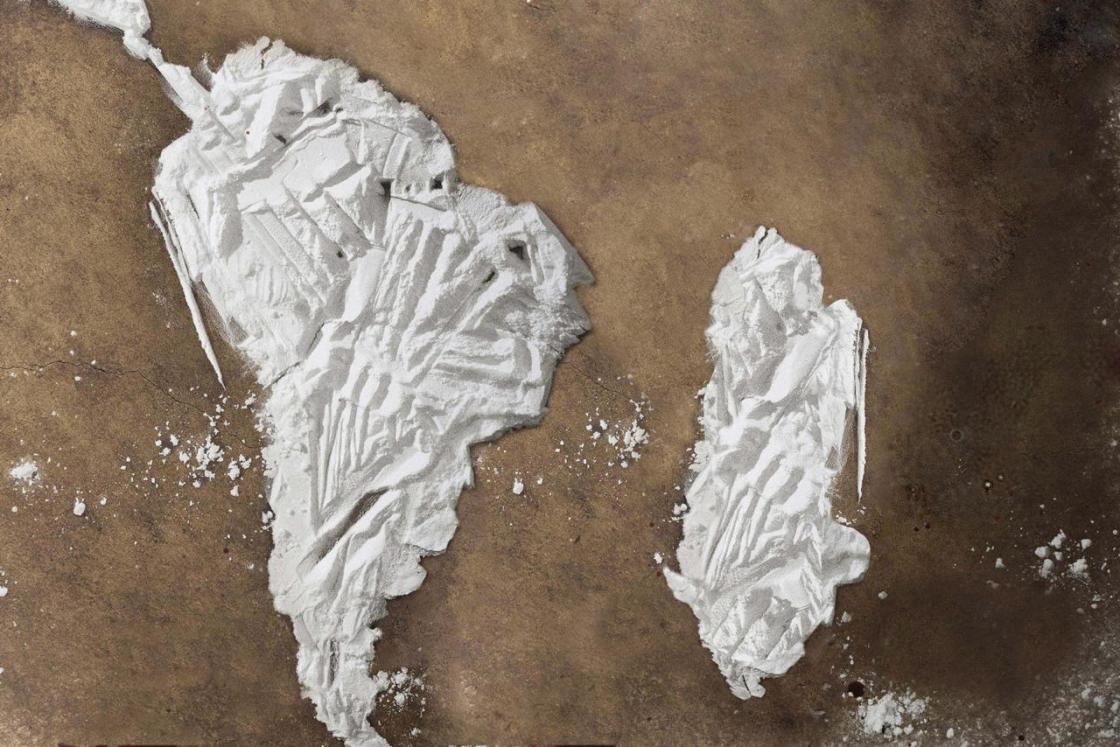
A 2019 report by the U.S. State Department confirmed what had long been evident to European and Albanian investigators: Albanian criminal groups were smuggling cocaine into Europe, sourcing it directly from Colombia, Ecuador, and other Latin American countries.
But how did Albanians gain direct access to these supply lines? How did criminal organizations from a small Southeastern European country rise to become major players in the international drug trade?
The Beginning: The Operation That Exposed the First Links
In the early 2000s, Albanians were directly linked to Colombian cocaine for the first time. “Operación Journey,” an international crackdown led by the DEA, resulted in the arrest of over 40 individuals, including Frederik Durda and Sokol Koçiu—the latter, at the time, serving as the police chief of Vlorë.
Investigations uncovered a trafficking route that moved 25 tons of cocaine from Colombia across 12 countries, including Albania. Witnesses later revealed that an estimated 68 tons of cocaine had been smuggled by ship between 1997 and 2000, allegedly supplied by the infamous Medellín Cartel.
This operation marked a turning point—Albanians had moved beyond arms trafficking, cannabis smuggling, and prostitution to a far more lucrative trade: cocaine. And this was only the beginning.
Large Shipments: When Albania Became a Key Transit Hub
For years, various Albanian criminal groups were suspected of being involved in cocaine smuggling across Europe. However, it wasn’t until after 2010 that their direct collaborations with Latin American cartels became widely documented.
- March 2011 – Cocaine Concealed in Palm Oil
Spanish authorities intercepted cocaine dissolved in over 50 barrels of palm oil. Once processed, the shipment could yield around 200 kg of pure cocaine. The cargo, ordered from Colombia, was allowed to proceed under surveillance and was eventually tracked to Gjirokastër, Albania, at a factory owned by businessman Dhimitraq Harizaj, who was later sentenced to 11 years in prison.
- June 2014 – Cocaine Smuggled in Bananas
Montenegrin authorities discovered 250 kg of cocaine hidden in banana shipments from Ecuador. The cargo had been ordered by a company in Fier, Albania, but investigators were unable to prove that its owners were directly involved.
- February 2018 – 613 kg of Cocaine in Maminas
Colombian authorities tipped off investigators about a shipment of 613 kg of cocaine hidden in banana containers en route to Maminas, Albania. The shipment was allowed to continue under surveillance and was seized before being unloaded. The company’s owner, Abër Çekaj, and his associates were sentenced to 8–14 years in prison. The cocaine was suspected to have been supplied by the infamous “Clan del Golfo.”
- May 2018 – Cocaine Smuggled via Private Charter Flights
Spanish authorities dismantled a trafficking ring allegedly led by Albanians Julian Gjoka (alias Deblini) and Arjan Ndoci (alias Dritan Gradica). The group smuggled cocaine using private charter flights. Authorities seized €1.5 million in cash and one ton of cocaine, packaged with the label “CR7.”
- Summer 2019 – Suspicious Shipments in Greece and the Case of Gentian Malindi
Greek authorities seized 700 kg of cocaine in containers from South America, some of which were destined for Albania. A shipment of 137 kg was tracked until a group, including Gentian Malindi, attempted to extract it from the Port of Durrës. Malindi was sentenced to 13 years in prison.
These cases confirmed that Albania was no longer merely a transit route but had become a key strategic hub in the global cocaine trade.
Cocaine Processing Labs: When Albania Began Refining Drugs
Albania’s role in the drug trade extended beyond smuggling. The discovery of cocaine-processing labs revealed an even deeper level of involvement by Albanian criminal networks.
- June 2014 – The Laç Lab
Authorities uncovered a cocaine lab in Fushë-Kuqe, located in a villa owned by former police officer Gëzim Çela. The raid seized 850 liters of processing chemicals and a cache of heavy weapons. Çela, later dubbed “The Drug Baron” by the media, evaded capture for a decade before being arrested in Kosovo.
- January 2015 – The Xibraka Lab
Following intelligence from German authorities, Albanian police raided a warehouse near Elbasan, discovering a drug-processing facility containing 121 kg of cocaine and 4 tons of chemical precursors. The raw product was suspected to have been imported disguised as construction materials like cement. Among the nine arrested were two Latin American chemists, Cesar Avila and Valter Moreno.
- October 2018 – The Brenog Lab
A sophisticated drug lab was uncovered in Has, northern Albania. Authorities seized 120 kg of drugs, including 18 kg of pure cocaine. Over 40 suspects were investigated, including members of the notorious Avdylaj group, but charges were ultimately brought against only 18 individuals.
- November 2022 – The Frakull Lab
Authorities dismantled a cocaine lab in Fier, where the drug was imported mixed with chemical fertilizers. Among those implicated was a Colombian, Samir Rosales Rodriguez, allegedly connected to Colombia’s infamous “Cali Cartel.”
- November 2024 – The Fushë-Kruja Lab
A lab in Fushë-Krujë was linked to a larger operation based in Tirana’s “Kodra e Diellit” district. Ten people were arrested, including three from Colombia and Venezuela: Hiwlen Ledezma Narvaez, Joze Ramon Zacarias Vasquez, Samuel Alfonso Moreno Serrano. The group reportedly smuggled raw cocaine by concealing it within 48 tons of cattle hides.
Assassinations and Arrests in Latin America
As Albanian drug networks expanded, they became embroiled in violent conflicts across South America, often clashing with local cartels.
- Dritan Rexhepi
A founder of the “Kompania Bello” organization, which allegedly collaborated for over 15 years with the Italian mafia to traffic cocaine from Ecuador to Europe. Known for multiple prison escapes, he was arrested in Ecuador in 2014 but later fled. Captured in Turkey in November 2023, he was extradited to Albania in January 2025, where he faces charges including kidnapping, murder, and drug trafficking.
- Dritan Gjika
Considered Rexhepi’s successor in the cocaine trade from Ecuador, he reportedly maintained strong economic and political connections to facilitate money laundering. He has been internationally wanted since February 2024.
- Remzi Ademi
A Kosovo-born Albanian, suspected to be Rexhepi’s right-hand man in “Kompania Bello.” He allegedly coordinated shipments from Ecuador and ordered executions of rival Albanians. Arrested in North Macedonia in December 2023, Ecuadorian authorities had previously declared him dead.
Several other Albanians, including Ilir Hidri, Adriatik Lagji, Adriatik Tresa and Ergys Dashi, have been assassinated in drug-related violence in Colombia and Ecuador.
Money Laundering and the Future of the Trade
Albanian cocaine traffickers have developed a sophisticated financial network for laundering profits, primarily investing in real estate, tourism, and gambling.
Investigations based on encrypted communication platforms like Sky ECC and EncroChat have exposed at least seven major criminal groups operating in Albania. Files from Operation “Metamorphosis” revealed how these networks were involved not only in drug trafficking but also in contract killings, kidnappings, and money laundering through shell companies and cryptocurrencies.
The widening investigations into these groups continue to expose their vast influence and financial reach across multiple sectors.
*Published in 2020 on Exit.al – updated in March 2025. (For the full Albanian version: Link)
 erblinvukaj.blog